Poultry Farming Equipment and Their Uses: List & Prices in Kenya
Whether you are starting with 50 kienyeji chickens or running a few thousand layers, the right poultry equipment decides how fast your birds grow, how many eggs you collect and how much feed you waste. This guide lists the main poultry farming equipment used in Kenya, what each one is for, how many you need, and what it costs today.
Updated October 2026. Prices are Ecochicks prices at the time of writing. Open any product for today's price; we deliver countrywide and you can pay on delivery.
Poultry equipment at a glance
| Equipment | What it is for | Price from |
|---|---|---|
| Drinkers | Clean water all day, from chicks to layers | KSh 90 |
| Feeders | Feeding without waste or droppings in the feed | KSh 90 |
| Brooders | Keeping chicks warm for the first 3–4 weeks | KSh 700 |
| Egg incubators | Hatching your own chicks from fertile eggs | KSh 13,500 |
| Nesting boxes | Clean, unbroken eggs from free-range and deep-litter hens | KSh 2,200 |
| Layer cages | Keeping many layers in a small house | KSh 33,000 |
| Egg trays | Collecting, storing and selling eggs | KSh 100 |
| Exhaust fans | Fresh air and cooling in closed houses | KSh 9,800 |
| Pluckers and debeakers | Slaughter, plucking and beak trimming | KSh 19,500 |
| Sprayers and biosecurity | Disinfecting the house and keeping disease out | KSh 2,700 |
1. Poultry drinkers

Chickens drink about twice as much water as they eat feed, and a bird that runs out of water stops eating and laying. Choose the drinker by the age of your birds and the size of your flock.
Manual (fountain) drinkers
A jar that you fill and turn onto a base, so water flows into the drinking ring as the birds drink. They are cheap, easy to clean and the easiest way to give vitamins, medicine and vaccines through water. Use the small 1.5–4 litre sizes for chicks and 9–14 litre sizes for grown birds. Raise the drinker on a block as birds grow, so the rim is level with their backs and they do not kick litter into the water.
From Ecochicks: 3-litre drinker – KSh 320 · 14-litre drinker – KSh 1,000 · all chicken drinkers
Automatic bell drinkers
A plastic bell hung from the roof and connected to a water tank by a pipe. A valve keeps the water at the same level all day, so you do not refill by hand. They suit deep-litter houses with a few hundred birds or more. Plan about one bell drinker for every 80–100 birds and adjust the height as the birds grow.
From Ecochicks: 36 cm automatic bell drinker – KSh 1,350
Nipple drinkers
Small valves on a water pipe that release a drop when a bird pecks them. The water stays clean because birds never step in it, which makes nipple lines the usual choice for battery cages. In deep litter, fit a drip catcher under each nipple so the litter stays dry.
From Ecochicks: drip catcher for nipple drinkers – KSh 90
2. Poultry feeders

Feed is the biggest cost on any poultry farm, so a good feeder pays for itself by stopping waste. Fill feeders only about two-thirds full; birds flick feed out of a full feeder.
Chick feeders
Low, small feeders (about 450 g) that day-old chicks can reach easily. Use them for the first two to three weeks, then move to hanging feeders.
From Ecochicks: 450 g chick feeder – KSh 90
Hanging (tube) feeders
A cone or tube that releases feed into a round pan by gravity, hung from the roof on a rod or chain. One fill lasts several days, and you can raise it so the lip of the pan stays level with the birds' backs, which cuts waste. These are the most common feeders for kienyeji, broilers and layers on deep litter.
From Ecochicks: Kenpoly feeder with rod – KSh 850 · all chicken feeders
Linear (trough) feeders
Long troughs that birds feed from on both sides, often with a guard or spinner so they cannot stand in the feed. They are used along cage fronts and in large houses. Each metre of trough gives two metres of feeding space.
From Ecochicks: 1-metre linear feeder – KSh 2,700
Automatic feeding lines
On big commercial farms, an auger or chain carries feed from a bin along the whole house, powered by electricity. They save a lot of labour but only make sense for several thousand birds.
Shell grit box: layers need extra calcium for strong eggshells. Put crushed oyster shell or limestone grit in a separate small feeder so hens can take what they need.
3. Brooders (chick warmers)

Chicks cannot keep themselves warm for their first few weeks. Keep the brooding area at about 32–35°C in the first week, then lower it by 2–3°C every week until the chicks are feathered. Watch the chicks: huddled under the heat means they are cold, crowded at the edges means they are too hot, and spread out evenly means it is right.
Gas brooders
A ceramic burner run on LPG, hung above the chicks with a reflector canopy. They heat large numbers cheaply and work during power cuts. Hang the brooder about 1–1.5 m above the chicks and always use a proper regulator and hose.
From Ecochicks: 600-chick gas brooder – KSh 8,000 · gas brooder for chicks – KSh 12,000 · gas regulator – KSh 900
Infrared bulbs and ceramic heaters
Electric heat lamps hung over the chicks in a bulb holder. They are simple for small batches where power is reliable. Ceramic heaters give heat without light, so chicks rest better at night.
From Ecochicks: infrared brooder bulb – KSh 700 · ceramic brooder heater – KSh 900 · all brooders
Charcoal and kerosene stoves
Where there is no electricity or gas, a covered charcoal jiko or kerosene heater can warm the brooder. Keep it well ventilated, because these give off fumes that can kill chicks.
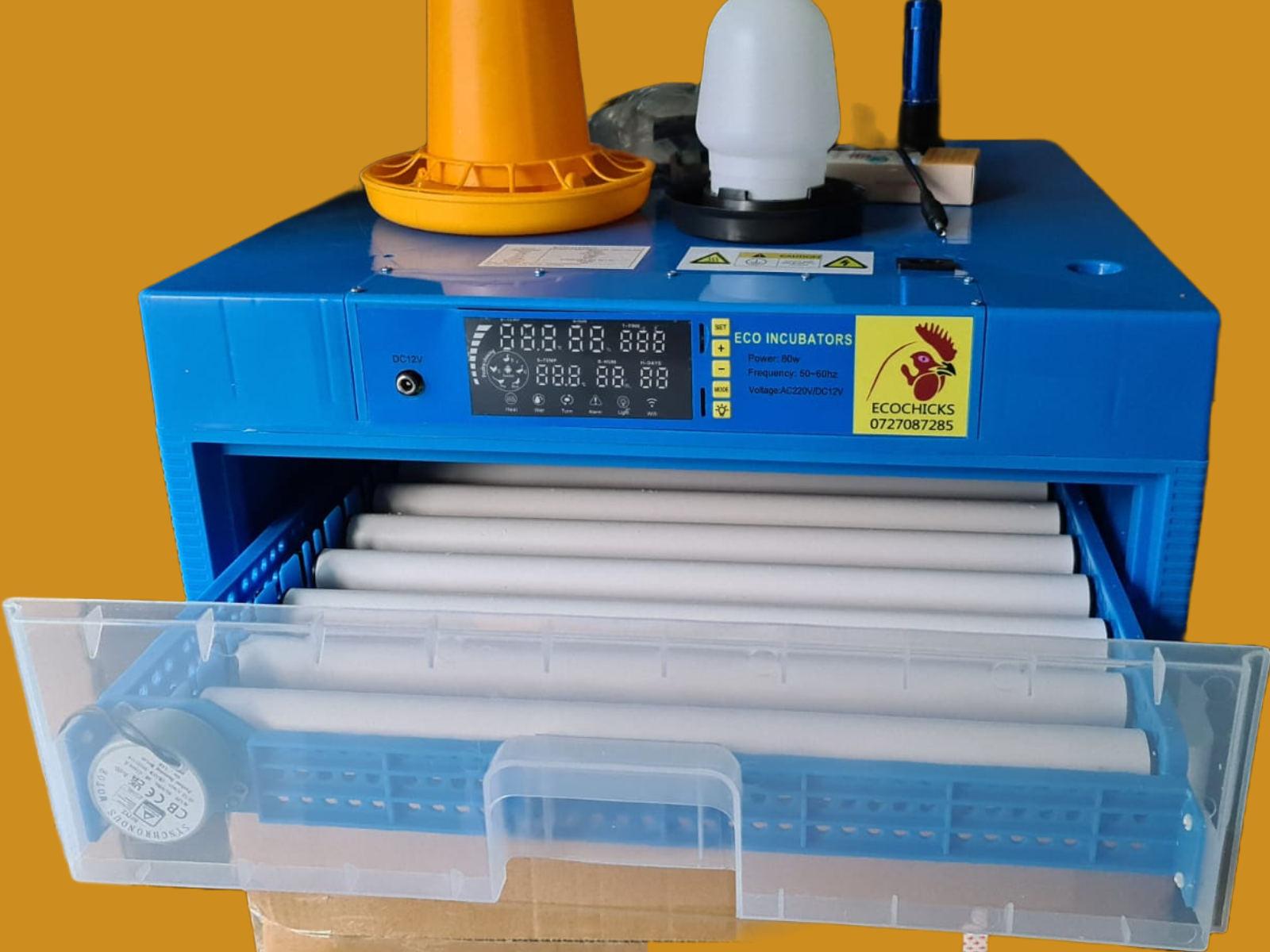
4. Egg incubators

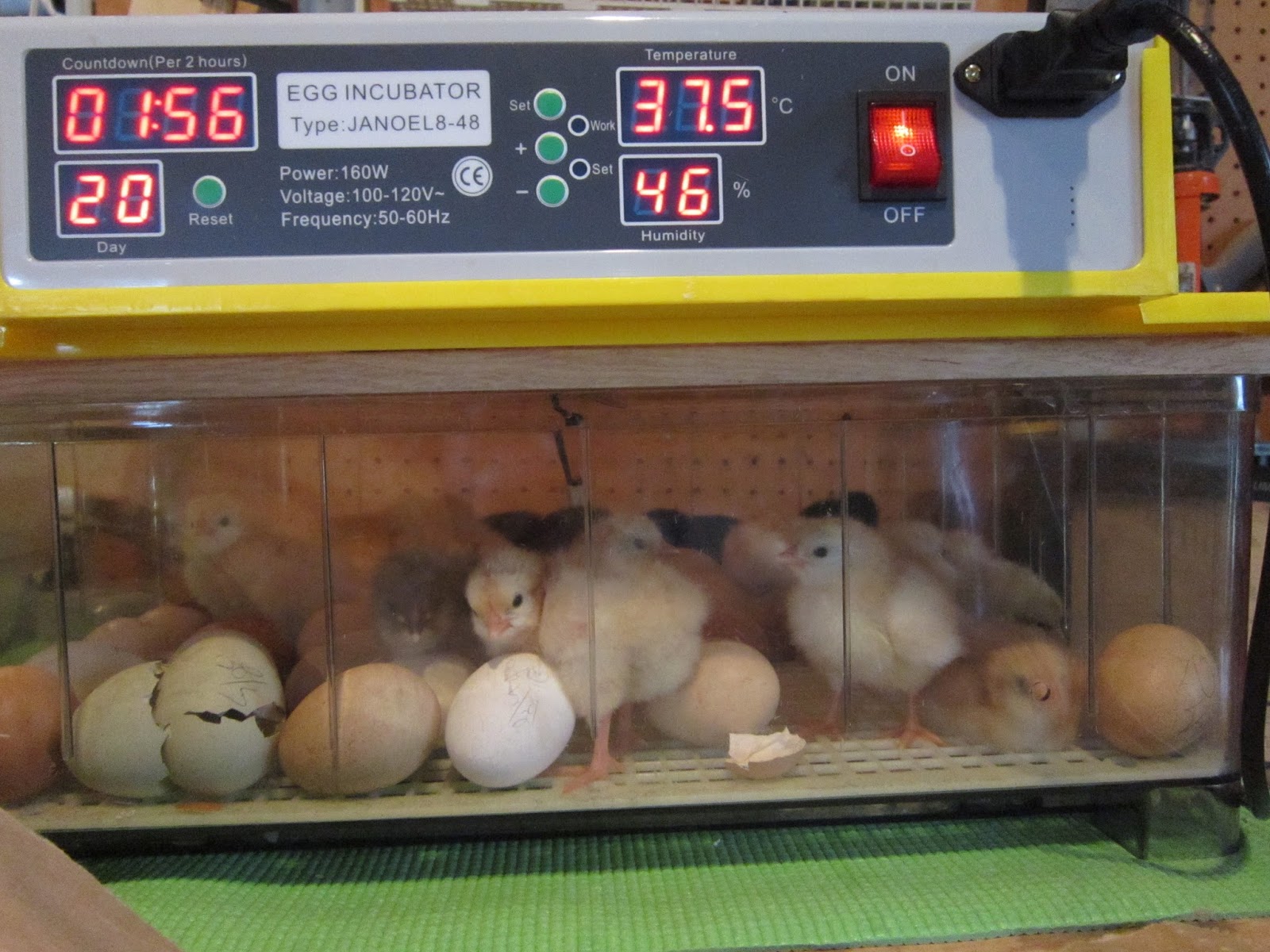
An incubator hatches fertile eggs without a broody hen by keeping the right temperature (37.5–37.8°C) and humidity and turning the eggs for you. Chicken eggs hatch in 21 days. With an incubator you can hatch chicks on your own schedule, or sell day-old chicks to other farmers.
Automatic incubators range from 64 eggs for a home farm to 2,000+ eggs for a hatchery. Solar and AC/DC models keep running when the power goes off. Use an egg candler to check which eggs are fertile around day 7.
From Ecochicks: 64-egg automatic incubator – KSh 13,500 · 204-egg solar incubator – KSh 27,000 · 320-egg solar incubator – KSh 32,000 · egg candler – KSh 500
Compare every size on our egg incubator prices in Kenya page.
5. Nesting boxes

Hens on deep litter or free range need a dark, quiet place to lay. Without nests they lay on the floor, where eggs get dirty, cracked or eaten. Roll-away nesting boxes have a sloped floor so each egg rolls into a covered container, which keeps it clean and stops egg-eating. Plan one nest compartment for every 4–5 hens.
From Ecochicks: wall-mounted nest with egg collector – KSh 2,200 · double nesting box – KSh 11,000 · all nesting boxes
6. Layer cages (battery cages)

Galvanised wire cages that hold layers in tiers, with a sloped floor that rolls eggs to the front and a trough or nipple line for feed and water. Cages fit more birds in a small house, keep eggs clean, and make it easy to spot a hen that has stopped laying. A-type cages stand in a triangle shape; H-type cages stack straight up and hold more birds per square metre.
From Ecochicks: A-type cage, 96 birds – KSh 33,000 · 128-layer cage – KSh 39,000 · H-type cage, 128 birds – KSh 45,000 · all chicken cages
Transport cages: plastic crates for moving chicks and grown birds to market without injury. From Ecochicks: poultry transport cage – KSh 4,500
7. Egg trays

Trays of 30 eggs are the standard way eggs are collected, stored and sold in Kenya. Store eggs pointed end down in a cool place. Plastic trays can be washed and reused, unlike paper trays.
From Ecochicks: reusable 30-egg tray – KSh 100
8. Ventilation and exhaust fans

Birds give off heat, moisture and ammonia from their droppings. Poor air causes breathing diseases and slows growth, and heat stress cuts egg production. Open-sided houses often need only good roof height and curtains, but closed houses and hot areas need exhaust fans to pull stale air out.
From Ecochicks: 12-inch exhaust fan – KSh 9,800 · 18-inch exhaust fan – KSh 18,200 · all exhaust fans
9. Slaughter, plucking and beak trimming

Chicken pluckers (dressing machines)
A drum lined with rubber fingers that spins scalded birds and removes the feathers in under a minute, instead of 10–15 minutes by hand. A plucker makes sense once you sell dressed broilers or kienyeji regularly. The rubber fingers wear out and are cheap to replace.
From Ecochicks: MS-60 feather plucker – KSh 59,000 · plucker fingers, set of 10 – KSh 1,050 · all pluckers · scalding machines
Debeakers
An electric beak trimmer with a hot blade that trims and seals the tip of the beak in one step. Trimming reduces pecking, cannibalism and feed waste in layers.
From Ecochicks: electric debeaking machine – KSh 19,500
10. Sprayers and biosecurity
Most poultry losses in Kenya come from disease such as Newcastle, Gumboro and coccidiosis, and disease usually walks in on people, equipment and wild birds. Clean and disinfect the house between flocks with a pressure sprayer, keep a footbath with disinfectant at the door, and have workers and visitors wear boots and overalls that stay on the farm.
From Ecochicks: heavy-duty pressure sprayer – KSh 2,700 · all sprayers
Other useful tools: weighing scales to check that birds are growing to target weight, a fly trap around the house, and a thermometer in the brooder.
What equipment do I need to start?
For a small kienyeji, broiler or layer farm of about 100 birds on deep litter, a good starting set is:
- a brooder (gas brooder or 1–2 infrared bulbs) for the first 3–4 weeks
- 3–4 chick feeders and 3–4 small drinkers for the brooding stage
- 4 hanging feeders and 2–3 large drinkers (9–14 litres) or one bell drinker for grown birds
- for layers, about 20–25 nest compartments and egg trays
- a sprayer and disinfectant for cleaning between flocks
Not sure what fits your farm? See our poultry starter kits, browse all poultry equipment, or call or WhatsApp us on 0727 087 285.
Frequently asked questions
How many feeders and drinkers do I need for 100 chickens?
For grown birds, about 4 hanging feeders and 2–3 large manual drinkers, or one automatic bell drinker. Chicks need more, smaller units placed close to the heat during brooding.
Which brooder is best when there is no electricity?
A gas brooder. It heats hundreds of chicks on LPG and does not depend on power. A covered charcoal jiko works for small batches if the house is well ventilated.
Are cages better than deep litter for layers?
Cages hold more birds in less space and give cleaner eggs with less egg-eating, but cost more to set up. Deep litter is cheaper to start and suits kienyeji and smaller flocks.
Do you deliver poultry equipment outside Nairobi?
Yes. Ecochicks delivers countrywide, and you can collect from our office at Wakulima House (KPCU), 1st Floor, Haile Selassie Avenue, Nairobi. Many items can be paid on delivery.
Questions from readers (1)
QHello, As a young farmer in Madagascar, I would like to know the good equipment to know before hatching if an egg is fertile or not. Furthermore, is it possible to identify the sex of hen before laying them in the incubator? Regards Rodolpho
AYes, candling is an effective way to determine if an egg is fertile or not. Here’s a quick guide: